
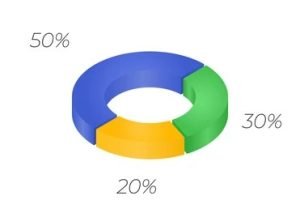
A rule that is typically applied to personal finances but can also be adopted by businesses is the 50/30/20 Rule. Managing cash flow – in or out – is known to be a significant setback for many businesses. Not having a good handle on finances can cripple any company, regardless of the amount of business it generates. Applying the rule to a business is slightly different than when it is applied to one’s personal finances. For the business, the rule suggests allocating income into three main buckets: essential expenses (50%), development & growth (30%), and savings investments (20%). The goal of the three buckets is that the business is operating, conducting research and developing other ways to improve its operations, and investing in its tomorrow (future). A brief breakdown of each category will help provide a better understanding of the Rule and its importance to businesses.
Essential Expenses (50%) –
For a business to operate, it must spend money. Money is used to turn raw material or inventory into a finished product. Money is used to provide services, such as accounting, legal, photography, and many others. Expenses that make business operations possible include software, payroll, rent, utilities, insurance, professional service expenses, and business loans. Most management teams have no problem allocating funds to this category. The standard amount used, or suggested, is fifty percent of the total income received. This does not mean a business cannot spend more or less; however, the target amount should be as close to fifty percent as possible.
Development & Growth (30%) –
The second bucket is one where many business owners try either to avoid or pay little attention to – development & growth. However, for any company to expand and grow, it needs to continually develop its products and services. Whether that means pouring more resources into advertising and marketing, investing in new technology, or allocating more funds for training and employee development, the temptation to avoid directing funds into this category should be avoided at all costs. The Rule suggests that a healthy target is approximately thirty percent of a business’s income.
Savings Investments (20%) –
The final bucket is investments. Like a personal account, a business needs to ensure that it has savings for a rainy day. Unfortunately, many small companies delay or overlook savings, treating this category as an optional consideration rather than a necessity. Savings investments can take the form of funds in a savings account at a bank or an investment in financial instruments, such as stocks, futures, and bonds. Though obtaining a business loan is an option, building up a business savings account or investing funds in financial instruments can help address future emergencies without the company taking on more third-party debt.
If you have not considered how your company’s 50/30/20 Rule should be computed, remember the breakout among the three groups is not rigid, it may vary slightly from one company to another, please give us a call; we are happy to advice you as you make operational, developmental, and savings-related decisions about your business.
DISCLAIMER: The information provided herein does not constitute the provision of legal advice, tax advice, accounting services, or professional consulting of any kind. The information provided herein should not be used as a substitute for consultation with professional legal, tax, accounting, or other professional advisers. Before making any decision or taking any action, you should consult a professional adviser who has been provided with all pertinent facts relevant to your particular situation and for your particular state(s) of operation.


